

Harnessing the incredible power of microorganisms to produce a wide array of valuable compounds is as old as recorded civilization and continues to be a testament to human ingenuity. Within this practice, microbial biomanufacturing has long represented a cutting-edge frontier in industrial processes with a rich history that serves as a foundation for the ongoing exploration of microbial capabilities. As researchers and engineers continue to unlock the full potential of microbial biomanufacturing, let’s look back on how far we have come and explore the innovative solutions of tomorrow that are available today.
The Beginning of Microbial Biomanufacturing
Since the earliest days of civilization, humans have made fermented foods and beverages. It was not until the dawn of electricity in the early 20th century that fermentation processes were established for large-scale applications to produce chemicals such as acetone, butanol, ethanol, and citric acid. With the age of new, industrial-scale biomanufacturing, practices shifted away from traditional mixed cultures to leverage purified mono-culture microorganisms and large-scale anaerobic liquid fermentation. These advancements paved the way for the first generation of aerobic industrial-scale production platforms widely used to produce record amounts of critical penicillin during World War 2. Following this success, extensive optimization efforts to refine fermentation media, fermenter design, oxygen supply, and control of growth kinetics and physiology were prioritized. These efforts would enable the creation of several novel processes for producing antibiotics and would jumpstart the next era of microbial biomanufacturing.
Introduction of Recombinant DNA Technology
In 1973, the inaugural development of in vitro recombinant DNA plasmids opened the doors to a new realm of technical possibilities for microbial biomanufacturing. Following the emergence of recombinant DNA technology, the initial synthesis of human insulin and growth hormone swiftly became a reality. This breakthrough propelled the biopharmaceutical application of recombinant proteins, with nearly 40% of therapeutic proteins manufactured in microbial environments leveraging E. coli or yeasts. Concurrent research discovered that the fermentation of microbial cells could also be harnessed to produce a myriad of recombinant enzymes, which rapidly gained popularity in the industry as biocatalysts.
Sophistication of Manufacturing Platforms
The market for biopharmaceuticals has grown significantly in the past two decades, and with that, the scientific sophistication of the manufacturing technologies and processes used. While early processes relied on established unit operations and focused on scale-up and process optimization, changes in the regulatory frameworks in the early 2000s forced a shift that emphasized the importance of developing processes to deliver a certain product quality profile every single time. As a result, companies such as Cytovance adopted Quality by Design principles into their processes to focus on understanding the critical relationship between process and product. These efforts produced the consistent and reproducible manufacturing processes of today that allow the industry to set and meet high standards for product efficacy, quality, and safety needed for patients.
Today’s Era of Microbial Biomanufacturing
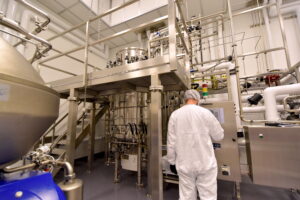
By 2009, over half of the 150 approved recombinant pharmaceuticals for human use were manufactured through microbial fermentation with either bacteria or yeast. In the following years, the biopharmaceutical industry trends shifted to focus on mammalian cell culture biomanufacturing platforms for the expression of antibodies and other larger proteins that required posttranslational modifications. Because of this, by 2018 nearly 70% of biologics were produced via mammalian cell culture. However, as microbial fermentation technologies have continued to evolve and impact multiple product categories, there has been a resurgence in microbial manufacturing to support novel drugs! This is best reflected in recent market expansion and a projected $4 billion value in microbial process outsourcing by the end of 2026.
Looking to the Future
As we move into the future of microbial biomanufacturing, the overarching goal is to produce products with increased efficacy over existing platforms regarding benchmark parameters such as yield, productivity, product titer, scale-up feasibility, and sustainability. This is easier said than done since platform processes, as often utilized in mammalian production, are not possible in a microbial environment where every protein is unique with its own set of challenges. But at Cytovance, we are skilled at overcoming obstacles with ingenuity and have invested in solutions to overcome these challenges and help reduce development timelines. One such solution we employ is leveraging capabilities such as a strain development toolbox coupled with upstream development templates and a refold toolbox to screen more options in parallel and better develop critical next-generation manufacturing processes.
Obstacles lead to innovation, and we are just one part of a larger narrative of ingenuity around microbial fermentation. New technologies and advancements in this space are continually being developed and brought forward to make next-generation therapies possible and efficient. Not only have improvements been made in genetically engineered microbial strains to contribute to higher yields, but recent microbial expression systems have been engineered to secrete the biological drug substance into the culture media. Our partner, Vectron Biosolutions’ VB Secretion technology, uses specific tags to direct the transport of proteins out of the cell to prevent the accumulation of the expressed protein as an insoluble aggregate. This exciting technology helps significantly when working with hard-to-express proteins that cause toxicity to the host cells and enables decreases in downstream purification resources, resulting in a high yield, economically attractive production process.
Innovative microbial biomanufacturing solutions are here to stay! Cutting-edge technologies and the versatility of microbial systems, coupled with advancements in genetic engineering and synthetic biology are facilitating the efficient and cost-effective production of diverse compounds, ranging from enzymes to proteins to patient ready pharmaceuticals. Advancements like those we are sourcing for our customers stand at the forefront of this transformative era in biopharmaceutical production, promising a future where microorganisms continue to contribute significantly to the development of innovative solutions.
Works Cited:
https://academic.oup.com/jimb/article/44/4-5/773/5995920
https://www.pharmasalmanac.com/articles/the-renaissance-of-microbial-fermentation
https://www.annualreviews.org/doi/abs/10.1146/annurev-chembioeng-092220-125832
https://www.cell.com/trends/biotechnology/fulltext/S0167-7799(22)00075-0
https://www.vectronbiosolutions.com/
A three-minute investment could make all the difference for your molecule! Hear from our experts themselves on why we are the right choice to guide your program to its next milestone here.
- Interested in more microbial insights? Watch our Strain Development Strategies webinar.
- Need a product-specific strategy? Contact Us.
- Have an idea for an Ingenuity Blog topic? Let Us Know!